How to build a wildlife pond in 3 easy steps
Lifestyle
)
Get unlimited access with Boundless
Save on days out with a Boundless membership - Join today. Already a member? Log in to access all benefits.
Whether you go all out or build a simple, small pond, this can be a great way to help and welcome wildlife into your garden. Our easy step-by-step guide helps you on your journey to building a pond.
Creating a pond is a great way to bring a diversity of wildlife into your garden, providing a stepping stone for wildlife populations in the wider countryside to connect with each other.
Here we explain how to build the classic wildlife pond, but you can also build bog gardens, drainpipe rain gardens, or ponds in barrels or old sinks to create your own mini-wetland, all of which you can better differentiate between with WWT’s guide.
Boundless Group
Why not join the Boundless Gardening Group on Facebook. No matter how big or small your garden – maybe you’ve just got a window box – we have loads of ideas to keep you inspired. Gardening advice, top tips to share, quizzes to try your hand at and themed giveaways to take part in.
Boundless offer
You can also get inspired by taking yourself on a visit to one of WWT’s nine centres. Boundless members can enjoy unlimited access. Turn it into a family trip – take up to five children with an additional adult guest able to save 50% on entry.
Step 1: Building a pond in your garden
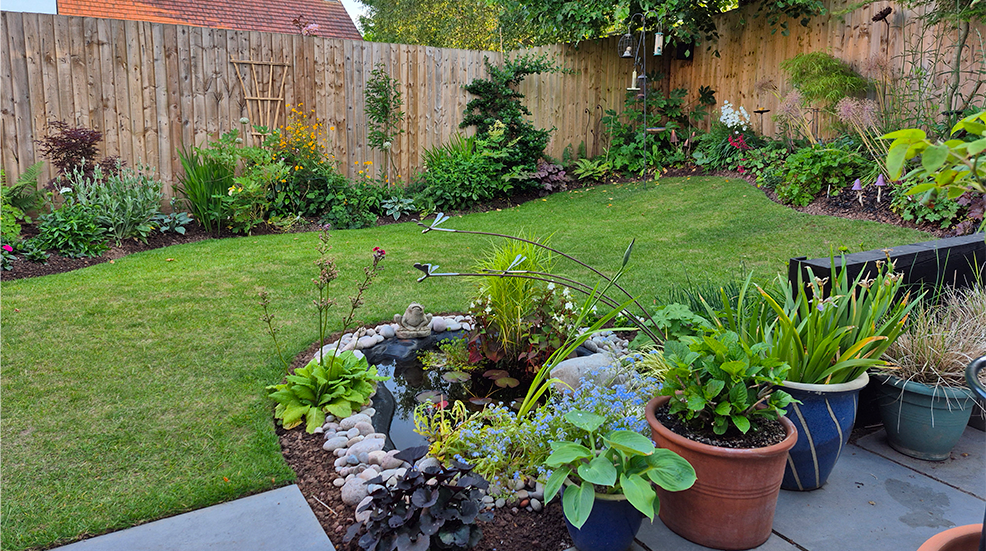 Janet Stanley
Where should you choose as your site for a pond
When planning where to put your pond, a key location factor is how many hours of sunlight it will receive during the day. Ideally, it should have a few hours of direct sunlight - but also have some shade to keep it cool. However, try to avoid overhanging trees as these will fill the pond with leaves.
Choosing a liner for your pond
If you are using a pre-formed rigid pond, you will need to dig out the liner’s exact shape, which can be a bit fiddly to do. If you are using a flexible pond liner, you will need twice the amount of liner than the area you are digging. Dig out the shape of the pond you want to create, ensuring different depths, removing any sharp stones, and creating at least one gently sloping side.
Once you’ve created your pond shape, lay down old carpet to create a smooth base. Unfold your pond liner and cover the carpet-lined shape. You can use aquatic compost or subsoil to add some growing medium for plants.
Other things to consider when digging a hole for your pond
A shallow sloping edge covered with pebbles and free of vegetation provides a great place for birds to bathe and drink. You may need to add in some heavier stones below the water line, to support this pebble beach. Adding a branch that overhangs the water and is firmly affixed in place will also encourage birds and dragonflies.
It is always tempting to fill up a pond with tap water, but this contains chemicals that will encourage algae to grow, including chlorine and nitrogen. Instead, try to use rainwater from a water butt. However, if you’re unable to use rainwater, you can use tap water - it is recommended to let it stand for about 48 hours, so that the chlorine can disperse.
Add plants to your pond
Add the plants into their appropriate zones - you may want to keep them in their pots or add to larger baskets and then add to the pond. Once everything is in, trim the liner as needed, using the soil to merge the edge of the liner into the surroundings. But first, make sure you’re choosing the right ones for your pond.
Step 2: Deciding which plants to use
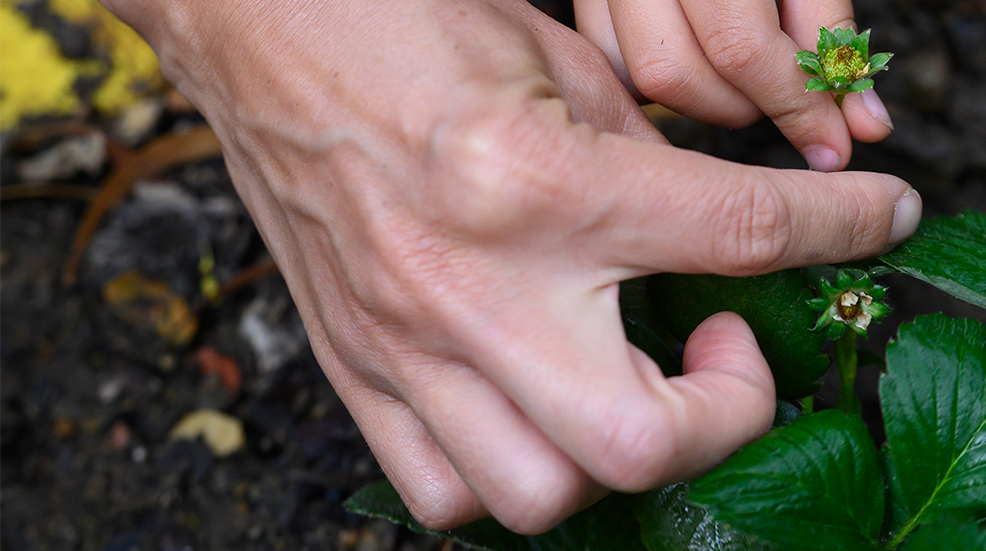 Getty ImagesWhen it comes to buying plants for your pond, you’ll find that they are labelled with different zones, i.e. what depth of water they will thrive in, as well as details on how much sun they require. Try to choose at least one or two from each zone depending on the size of your pond:
Zone 1 (bog plants): Marsh Marigold, Hemp Agrimony and Purple Loostrife.
Zones 2 and 3 (marginal plants): Yellow-flag Iris, Water Mint and Water Forget-me-not
Zone 4 (oxygenating and deep water plants): Hornwort and Curled Pondweed
Zone 5 (floating plants): Water lilies, Water Soldier and frogbit
Step 3: How to maintain your pond throughout the year
Keep an eye on your pond for damage to the liner, and remove any blanket weed that appears - as time passes, this should become less of an issue. You may find that water levels drop during periods of dry or hot weather, and that you need to top your pond up. As when you first filled the pond, it is best to use rainwater if possible, or tap water that has been left to stand.
If the plants grow well, you may need to remove excess vegetation. The best time of year for this is in late summer, and removed vegetation should be placed at the edge of the water for a day or so so that any creatures within it then have a chance to return to the pond.
What wildlife can I expect to see in my pond?
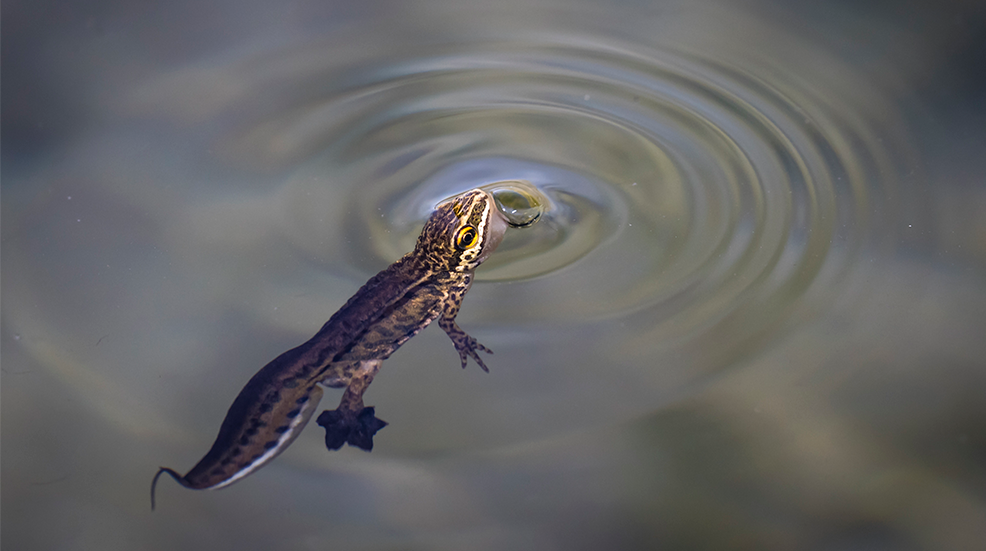 Getty ImagesYou may be surprised at how quickly wildlife can start appearing in your pond - water beetles have been known to arrive whilst a pond is still being filled with water. Dragonflies and damselflies may also find your pond relatively quickly.
You may find that you need to call upon your reserves of patience whilst waiting for wildlife to arrive. Don’t be tempted to move frogspawn or tadpoles from an existing pond to your new pond, as this can spread invasive species or diseases. And avoid introducing fish into your pond, as they will feed on the invertebrates and amphibians.
Alongside invertebrates and amphibians, you may find that your pond comes to support a wider range of wildlife too - from small mammals such as mice, to hedgehogs, foxes, and birds.
Scientific names
Whirligig beetle - Gyrinus substriatus
Dragonflies/damselflies found in garden ponds:
Broad bodied chaser dragonfly - Libellula depressa
Four spotted chaser dragonfly - Libellula quadrimaculata
Emperor dragonfly - Anax imperator
Common blue damselfly - Enallagma cyathigerum
Newts:
Smooth newt - Lissotriton vulgaris
Palmate newt - Lissotriton helveticus
Great crested newt - Triturus cristatus
Pond plants:
Hornwort - Ceratophyllum demersum
Curled Pondweed - Potamogeton crispus
Yellow-flag Iris - Iris pseudacorus
Water Forget-me-not - Myosotis scorpioides
Water lilies - Nymphaea
Water Soldier - Stratioites aloides
Frogbit - Hydrocharis morsus-ranae
Marsh Marigold - Caltha palustris
Hemp Agrimony - Eupatorium cannabinum
Purple Loostrife - Lythrum salicaria
This article was accurate at the time of publication. Please note information and offers shown may change over time.
)
About the Author
Megan Shersby
Megan Shersby is a naturalist and conservationist, and the lead author of Where to Watch Wildlife in Britain: By Low-Carbon Transport. She's currently the proud custodian of one garden pond – and is planning another.
For people working or have worked in healthcare, education, emergency services or other public sector or civil service roles.
)
Join today and get exclusive discounts!
Boundless membership brings you deals and discounts from more than 180 well-known brands.