
AI, or artificial intelligence, is seeping into every aspect of modern life. Find out everything you need to know about this new technology with our simple explainer.
You’ve probably heard people saying that “AI is taking over the world”. And, while we needn’t worry about Terminator-style robots overthrowing our towns and cities just yet, there is some truth in this claim. AI, or artificial intelligence, is everywhere now, impacting everything from transport to healthcare, cyber security to finance.
Indeed, you may already have come across it without realising. Have you ever received online shopping recommendations, heard your smart speaker offering to play songs “you might like” or had a photo app send you cute montages of pictures you’ve taken recently? These are all examples of AI at work.
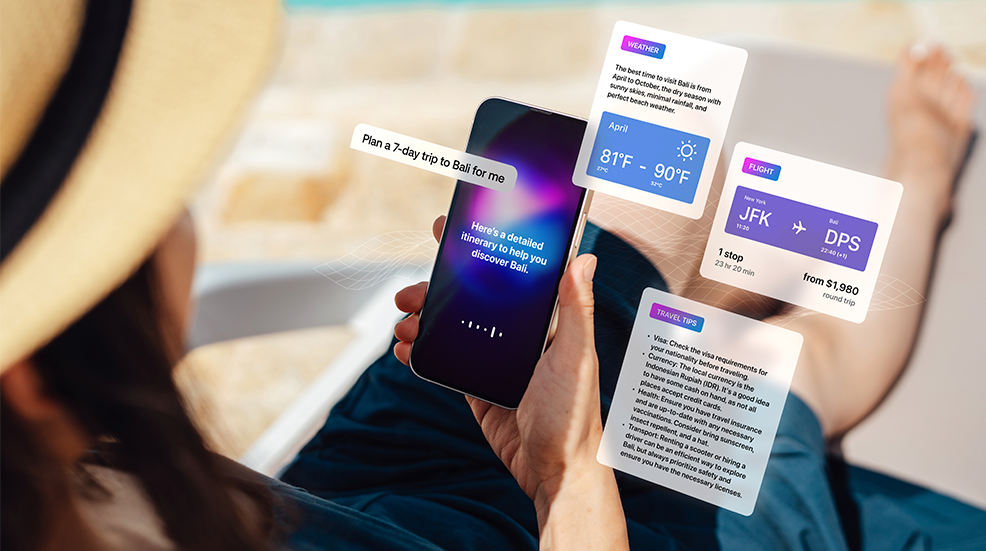
Thanks to services such as ChatGPT and Google Gemini, you can even speak directly to AI and ask it to help with a wide range of tasks, from writing letters to creating meal plans.
To help you understand and navigate this new technology, we’ve put together a simple explainer, answering all the questions you may have about artificial intelligence. By the time you get to the bottom of the page, you should be ready to reap the benefits of AI while avoiding its potential hazards.
What is AI?
As the name suggests, artificial intelligence is a technology that empowers computers to think like a human brain. Similar to how we learn as our brains develop, AI-powered computers use algorithms to recognise patterns from the vast amounts of data that’s fed to them. This then enables them to perform tasks, solve problems and even develop their own ideas.
How to spot AI online
AI is becoming more and more common online as companies strive to make their services better and more efficient. So, where might you see it in action? One place is in the ‘live chat’ portals that many firms now include on their websites to handle customer queries – and you’ll know you’re dealing with AI, or a ‘chat bot’, because responses to your questions will be pretty much instantaneous as the computer reels off its learned answers. However, while speedy replies sound good in principle, it can be frustrating if your problem is more nuanced and requires human attention.
Google is another platform that has started to use AI – and not just on its dedicated Gemini AI site. Now, whenever you ask the search giant a question, you’re immediately presented with an ‘AI overview’, which is basically a brief summary of all the key information its algorithm has collated. Once again, the instant response sounds appealing but comes with a caveat, with some users reporting that the information is not entirely accurate. With this in mind, it should not currently be relied upon to answer more important questions, such as those related to health.
AI is also increasingly being used for creative purposes, and there’s a dizzying range of apps offering to enhance your photos, write your CV or put your face into a music video. But, while the technology is improving day by day, the results are often wide of the mark, with images looking unrealistic and text appearing generated and soulless.
Ways to use AI in everyday life
Credit: Getty Images
While AI is far from perfect at this stage, there are still lots of ways that it can benefit you. Here are just a few suggestions:
- Saving money – A recent survey found that 40% of Brits have turned to AI for financial advice. And while it may not deliver reliable stock market tips, asking AI sites such as ChatGPT or Google Gemini more generic questions – such as “What are 10 ways to improve my bank balance?” or “What’s the cheapest way to fly to Australia?” – could prove to be very helpful.
- Recipe inspiration – Like having your own personal chef, AI can be used to help with meal preparation. This could be anything from helping you to eat better (“Give me some healthier alternatives to oven chips”) to keeping costs down (“What meals can I make using what I have in my cupboard?” – your friendly AI assistant will ask what ingredients you have and then curate a menu.)
- Creating workouts – Unless you have a personal trainer, it can be hard knowing what exercise is best for you. AI can provide a bespoke workout tailored to your specific limitations and goals. Whether you ask it to “Suggest some stretching routines for someone who’s never done it before” or “Tell me the best way to walk with a Zimmer frame,” you can expect personalised advice in an instant.
Tips for using AI safely
It was inevitable that a powerful tool like AI would eventually fall into the wrong hands, and the technology is already being used for nefarious purposes. Using AI, criminals can easily create authentic-looking websites, emails and text messages, to dupe people into parting with their hard-earned cash. So, you’re advised to stay vigilant at all times, and that means not sharing your personal details unless you’re absolutely sure that the recipient is trustworthy. For guidance on what to look out for, read this BBC article.
It’s not just criminal activity that you have to be careful of – as mentioned previously, you should never completely trust AI advice on important issues such as health and finance. Treat it as guidance rather than expert instructions, and always double-check what it says with another, reliable source.
Why learning about AI is so important
It might seem like a lot of information to take in, but the quicker you can get to grips with AI, the better. Not only can it make your life simpler, by instantly helping you with tasks that might otherwise take hours. But understanding the dangers of this new technology will help protect you from problems in the future.
Do more with Boundless
If you're working in or retired from the public sector or civil service, Boundless has two great membership options to choose from: Boundless and Boundless Plus.
With Boundless, you get unlimited access or discounted entry to many of the UK’s top attractions including Kew Gardens and Wakehurst and WWT centres across the UK, as well as year-round deals on restaurants, holidays, shopping and much more. With Boundless Plus, you can enjoy additional benefits, including unlimited access to Historic Royal Palaces sites, National Trust for Scotland places, access to the Ramblers' extensive group walks and routes, and peace of mind with roadside assistance and local recovery by Britannia Rescue.
 Science
 Technology